What is Cortisol?
The hormone behind stress, energy balance
Cortisol is a hormone produced by your adrenal glands that plays a critical role in how your body responds to daily demands – not just stress.
It helps regulate:

Cortisol isn’t “good” or “bad.” It’s essential. What matters is timing and balance.
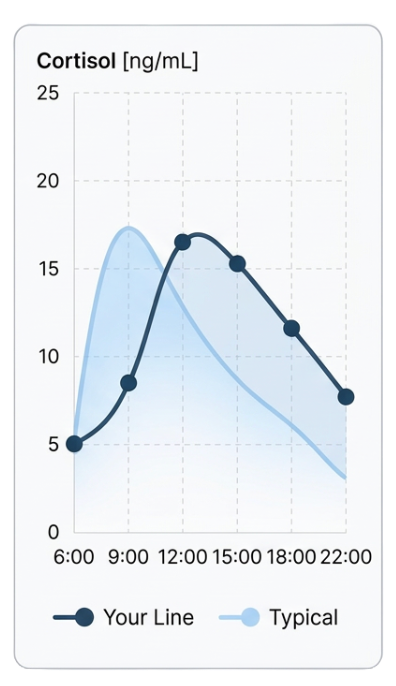
Cortisol naturally follows a daily rhythm: it should peak shortly after waking and gradually taper throughout the day.
When that cortisol rhythm is disrupted, you may notice changes in:
Sleep quality
Energy and focus
Mood and anxiety levels
Metabolism and fat storage
Recovery from exercise or stress
Understanding cortisol isn’t about reacting to a single number—it’s about seeing patterns over time.
Designed Around How Cortisol Actually Works
Why eSigns measures cortisol throughout the day
At eSigns, our technology is designed around the body’s natural cortisol rhythm.
By measuring cortisol three to four times a day—morning, mid-day, and night, we help map your diurnal curve, showing how stress and recovery fluctuate across real life. This turns hormone testing from a one-time snapshot into an ongoing understanding of what’s normal for you.
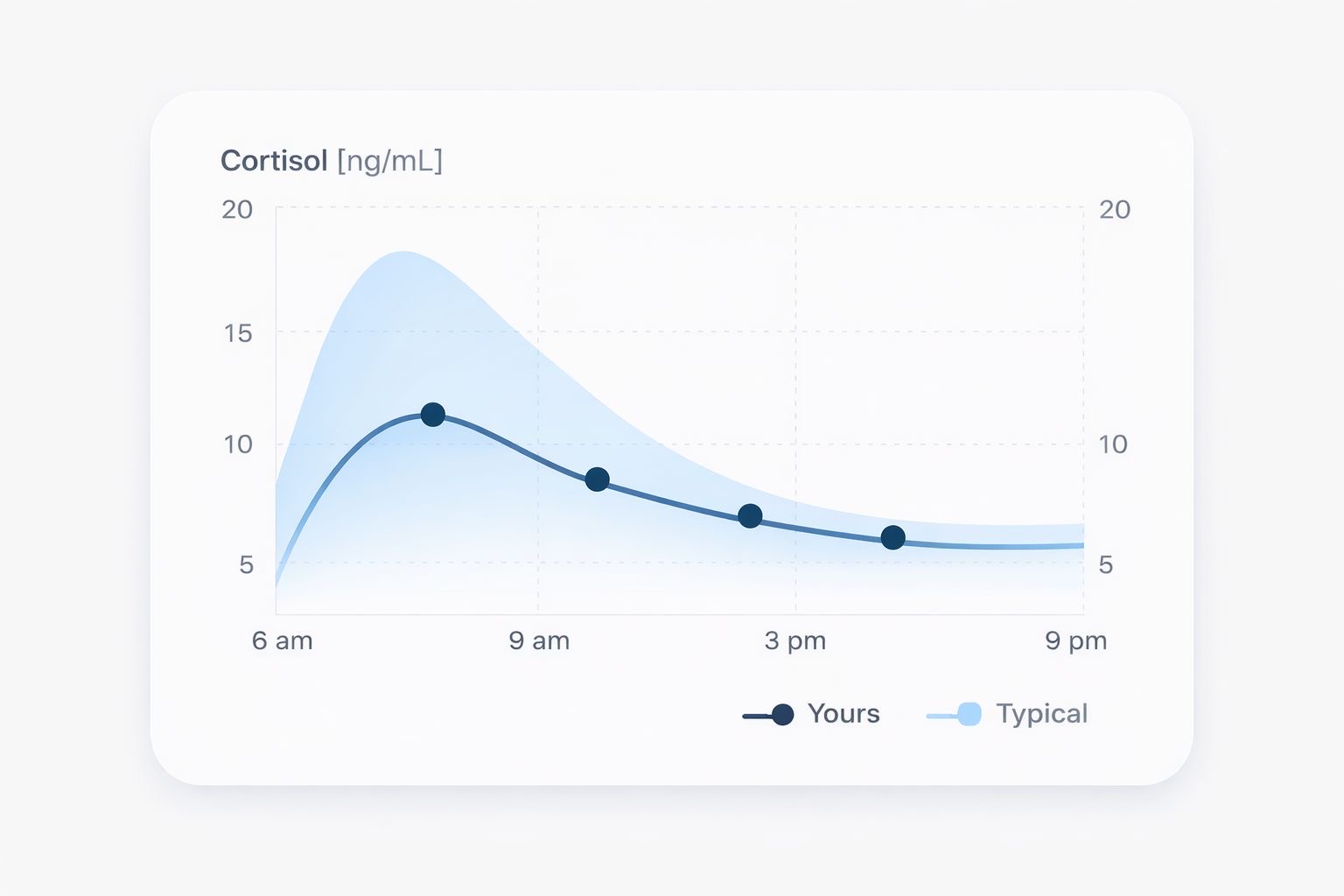
Understanding the Diurnal Curve: What patterns look like overtime
By measuring Cortisol throughout the day, patterns begin to emerge
First Week: Establish Your Baseline
First Month: Spot the Patterns
Three Months and Beyond: Long-Term Insight
This is where insight becomes actionable.
Why Measuring Over Time Matters
As patterns take shape, changes in the diurnal curve can begin to reflect what your body is responding to over time. Different curve shapes may align with ongoing stressors or lifestyle factors – highlighting why consistent measurement matters.
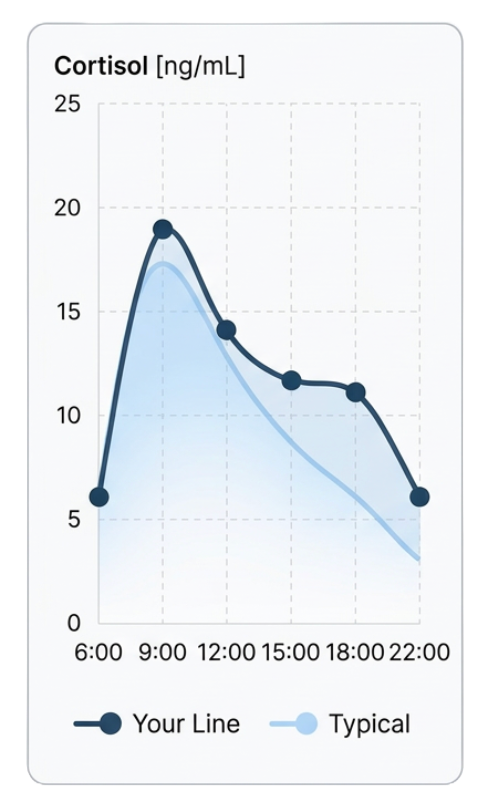
Overtraining or insufficient recovery
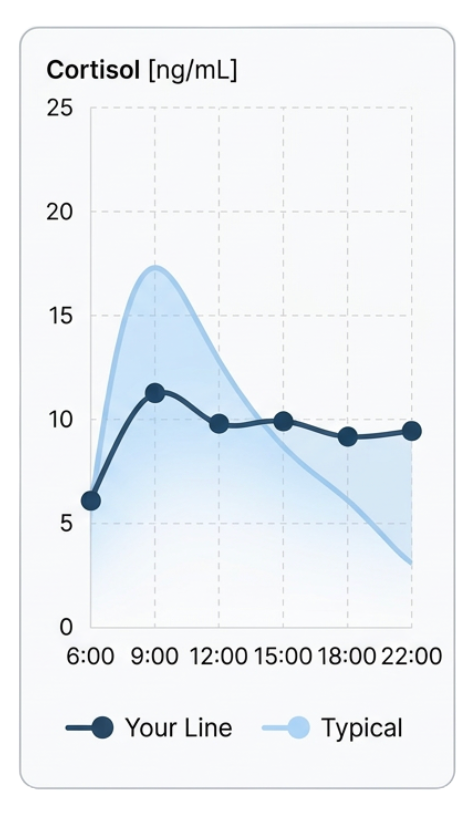
Chronic stress